0
Table of Contents
Choosing a web design company in 2026? Start with these 10
Picking a web design company in 2026 is more about fit than ranking.
When you’re choosing an agency, it helps to know a bit more about the projects in its portfolio. A design you like is a useful starting point, but you’ll also want to know whether the team has handled the kind of problem you’re hiring them to solve.
To compare the best web design companies for your project, you need to know which problem each team says it can handle, what its public work supports, and what you still have to verify on a call. This is a curated and non-ranked shortlist. We also publish the article and appear in it, so we’ll be clear about that interest and apply the same questions to ourselves.
Our advice would be to just start with your website problem, explore the ten companies, then narrow the field to three comparable options and venture off from there.
How this shortlist was built
- The start was the ten companies included in the original version of this article.
- We checked official home, service, about, and work pages in early October 2026 for current stated positioning and publicly visible scope.
- Company facts come from first-party pages. The project situations below are our editorial suggestions.
- We did not commission a build, join sales calls, interview clients, create a scoring model, or run a cross-company performance test.
Start with the website problem
Start by writing down what you need help with. That gives you something concrete to look for in a portfolio, especially when a case study looks promising. What was the problem, and how much of it did the agency take on?
- A new positioning story and marketing site. Look for examples that cover brand, content, information architecture, and website design. Ask who owned each part, because four capabilities on a services page do not automatically arrive as one coordinated scope.
- An existing B2B site where content, structure, and build have stopped working together. Check whether the agency has handled integrated redesigns, who would be accountable for the whole engagement, which technical or content dependencies would remain with your team, and how reusable components would support future pages.
- A brand-plus-website engagement. Ask for a project where the agency was responsible for both pieces. A brand identity case and a separate UI case may show strong craft while leaving the combined delivery model unproven.
- A SaaS product or web-app design need. Product UI, a logged-in web app, and a marketing site involve different users, flows, content, and development work. Confirm which parts of your brief the agency covers and who handles the rest.
Across all four situations, look for evidence at three levels. The public case should show a problem that resembles yours closely enough to make the comparison useful. The proposal should turn broad capabilities into named deliverables, owners, and dependencies. The delivery plan should explain how your team will work with the site after launch: reusable components, CMS responsibilities, source files, documentation, and support all belong in that conversation. When an agency presents an outcome, ask who selected the baseline, who measured the result, and what else changed during the same period. A screenshot can show the interface; use the case, proposal, and delivery plan to verify the project scope, ownership, and measurement.
Once you've narrowed the problem, you can compare evidence that matches the engagement and identify unanswered questions before reviewing proposals.
10 web design companies worth a closer look
The web design firms below follow the existing article’s company set; the order does not indicate rank. Use this compact navigator to scan each company’s attributed focus and carry one useful question into the full profile.
| Company | Current stated focus | Ask about |
|---|---|---|
| Merge | Startup website design | Content and implementation ownership |
| Clay | Brand, product, websites, development | Which team fits the brief |
| Ramotion | Brand, UX, web, design systems | Assigned disciplines and handoff |
| Huemor | B2B digital agency | A genuinely comparable case |
| Focus Lab | B2B branding with web work | Where the web scope begins and ends |
| Digital Silk | Strategy-to-development web services | What the engagement includes |
| Baunfire | Web design and development | The accountable delivery team |
| Eleken | SaaS product design | Whether the marketing site is in scope |
| Lounge Lizard | Web design and development | Which current work matches the brief |
| Instrument | Brands, products, experiences | Website-specific scope and proof |
1. Merge
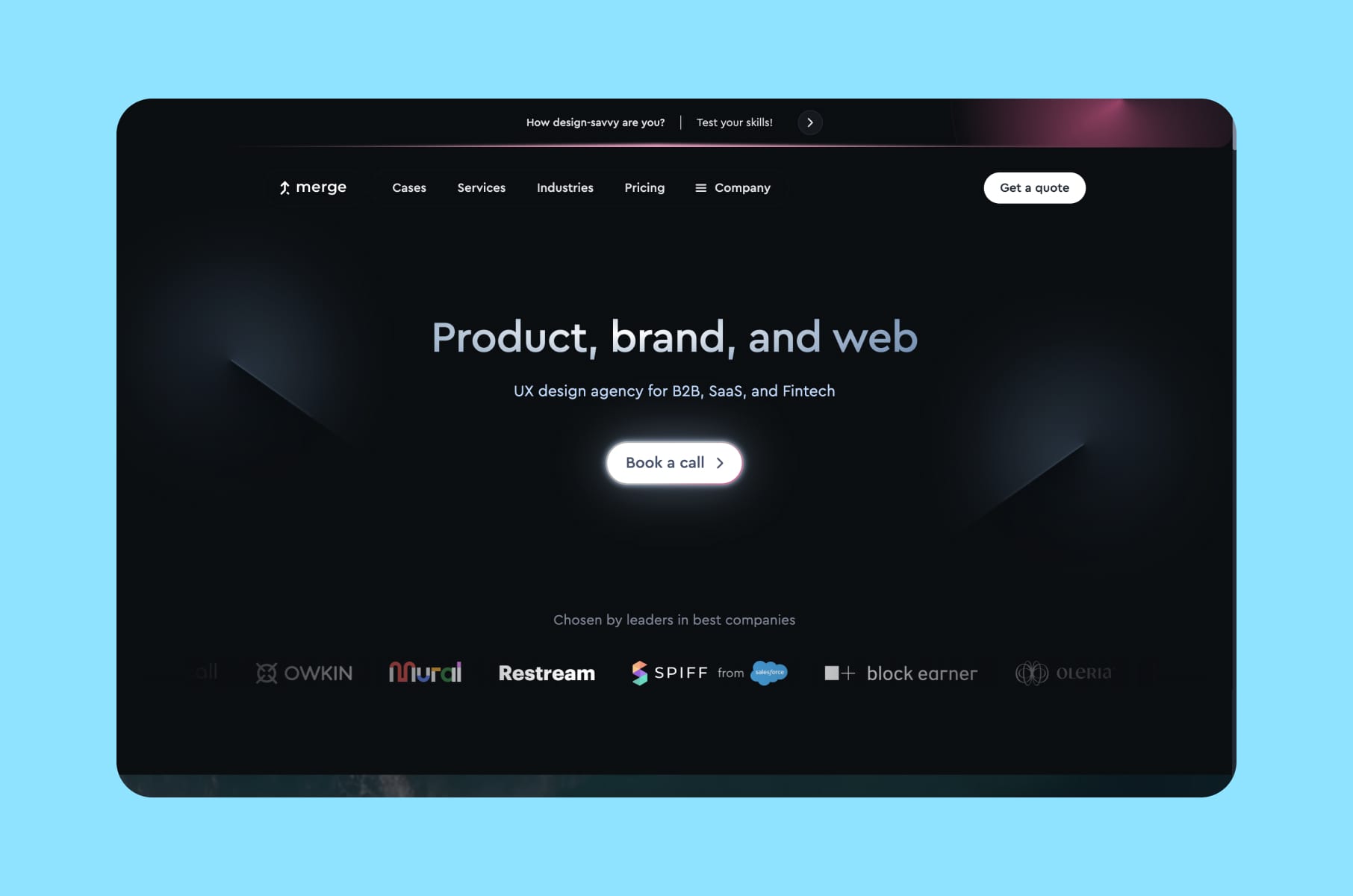
Merge describes its Website Design service as website design for startups. Depending on the agreed scope, the engagement may cover design and development. The service page also states that two review rounds are standard, with additional rounds agreed and priced separately.
Since we're the ones who have published this shortlist, treat this profile as first-party and put it through the same checks as every other entry.
Look closer if you are planning a startup website or rebuild where content structure, design, and agreed implementation need one scoped owner.
Ask: What exactly will be included in the signed scope: pages, content, CMS, integrations, development, milestones, review rounds, approval dependencies, and post-launch support? The answer should also explain how scope, dependencies, and approvals affect the project schedule. A universal timeline would be wonderfully convenient. Websites have other ideas.
2. Clay
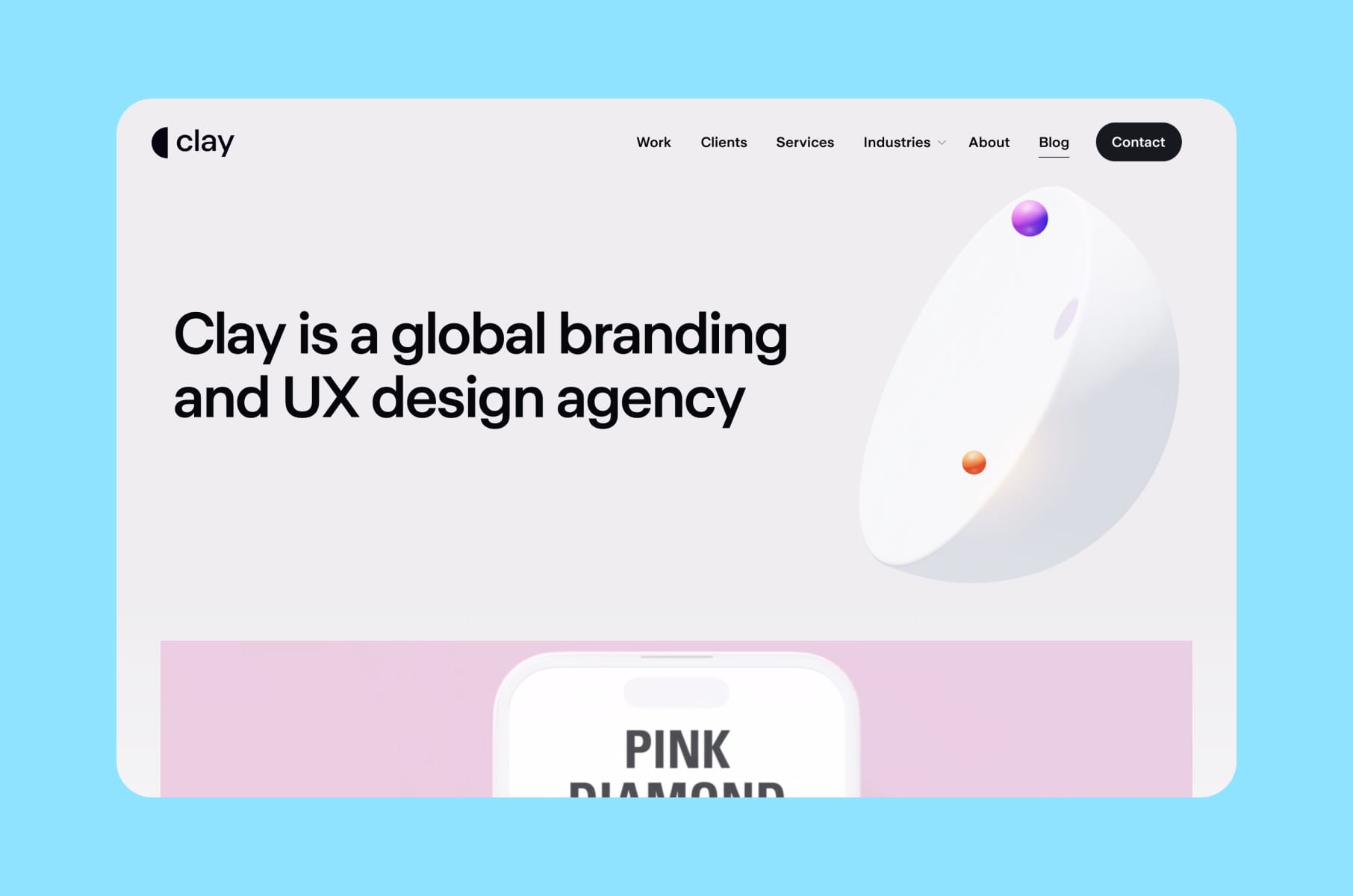
Clay describes itself as a full-service creative agency and lists branding, digital products, websites, and development among its capabilities. That range makes it relevant to briefs that cross more than one design discipline, provided the proposed team and deliverables match the work you actually need.
Look closer if your engagement may combine brand, product, and website work and you want one agency to coordinate those pieces. Ask how the proposed team would divide responsibility across the brief.
Ask: Which team would handle this particular website brief, and which comparable current projects show the same mix of responsibilities? Follow with development ownership, commercial terms, schedule, and the people who will stay involved after the pitch.
3. Ramotion
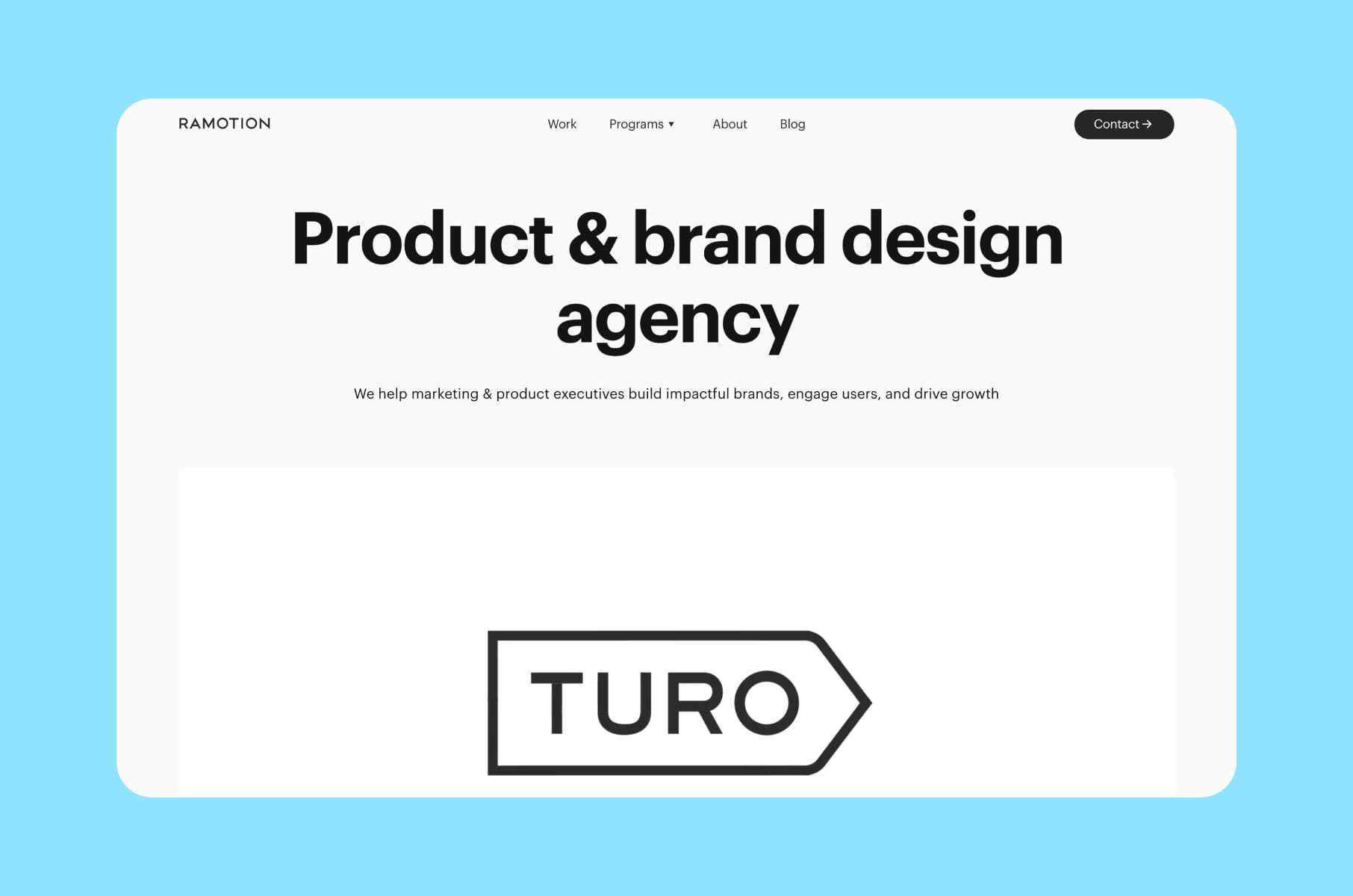
Ramotion calls itself a product and brand design agency. Its public services include branding, web design, UX design, design systems, and web-app development; its About page says the company has operated since 2009 and lists 70 team experts.
Look closer if the website sits inside a wider brand or product engagement and a design-system or UX capability matters to the brief. Confirm which team will own each deliverable; the public capability list does not establish that.
Ask: Can you show a current website project with a similar problem and explain which disciplines were assigned, who handled development, and how ownership and handoff worked? Availability and commercial terms belong in the same conversation.
4. Huemor
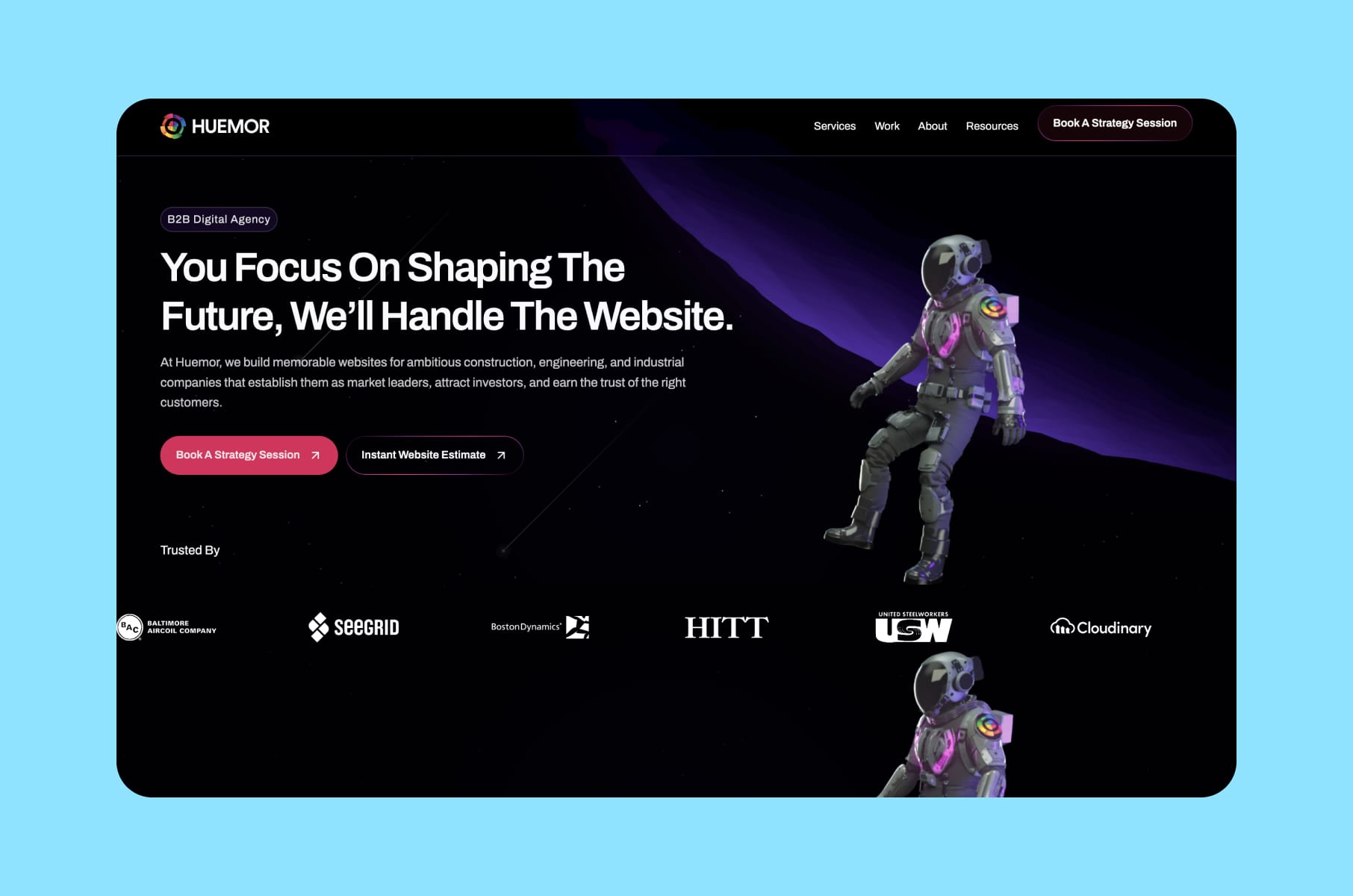
Huemor describes itself as a B2B digital agency and says it helps construction, engineering, manufacturing, and SaaS companies align digital strategy, brand, website, marketing, and technology.
Look closer if your B2B website needs several of those disciplines and you want to explore an integrated engagement. Use the sector focus as context, then ask for a case whose problem, scope, buying journey, and technical setup are close enough to yours to be useful.
Ask: Which recent case is closest to our starting problem, and what did your team actually own? Ask how the baseline and results were measured, who would be accountable for strategy and delivery, which CMS or technical work is included, and what support looks like after launch.
5. Focus Lab
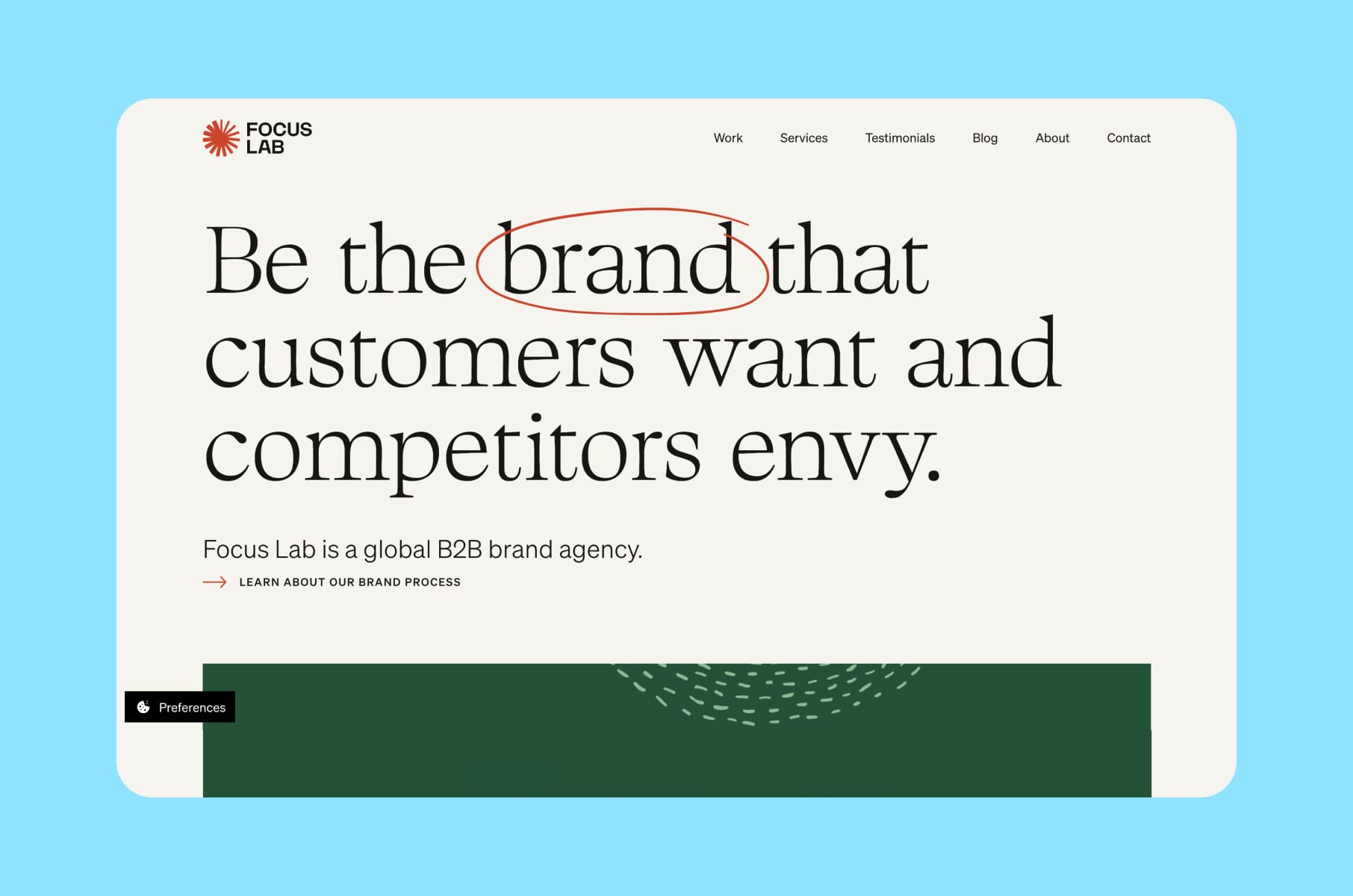
Focus Lab calls itself a B2B brand agency, says it has built more than 600 brands across B2B technology and manufacturing, and includes work tagged Web Design in its public portfolio.
Look closer if your starting point is a brand problem and the website is a required expression of that work. The web-design tag shows that web work is part of the public portfolio. Ask which parts of the actual site engagement would be in the signed scope and proposal: brand strategy, information architecture, content, interface design, and development.
Ask: Show me a project where you were responsible for both the brand and the website, then walk me through the exact web scope. Clarify content and IA responsibilities, development ownership, the proposed team, schedule, review process, and commercial terms.
6. Digital Silk
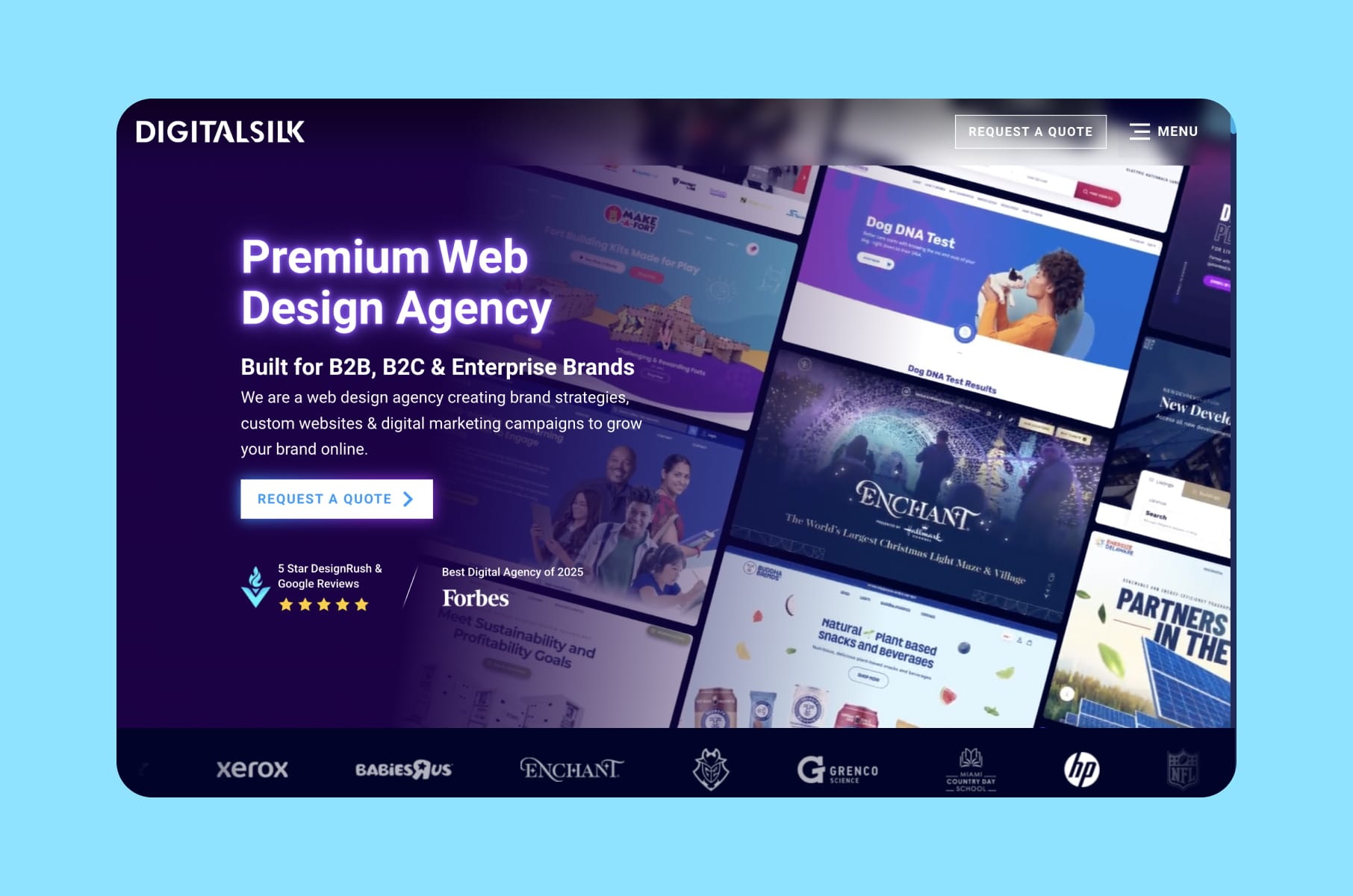
Digital Silk says its web-design service covers strategy, UX, design, development, and conversion optimization, and its service page names the technology stacks it supports.
Look closer if you are considering a full-service web engagement and those capabilities belong in your brief. A broad service menu can reduce coordination when the pieces are genuinely included. It also makes scope detail especially important: the proposal should identify the people, deliverables, dependencies, and measurement responsibilities behind each line item.
Ask: Which of these services are included for our project, who is accountable for each one, and what work would be subcontracted or left to our team? Ask for a comparable current case, the measurement basis behind any outcome claim, the expected schedule, and a complete view of fees and exclusions.
7. Baunfire
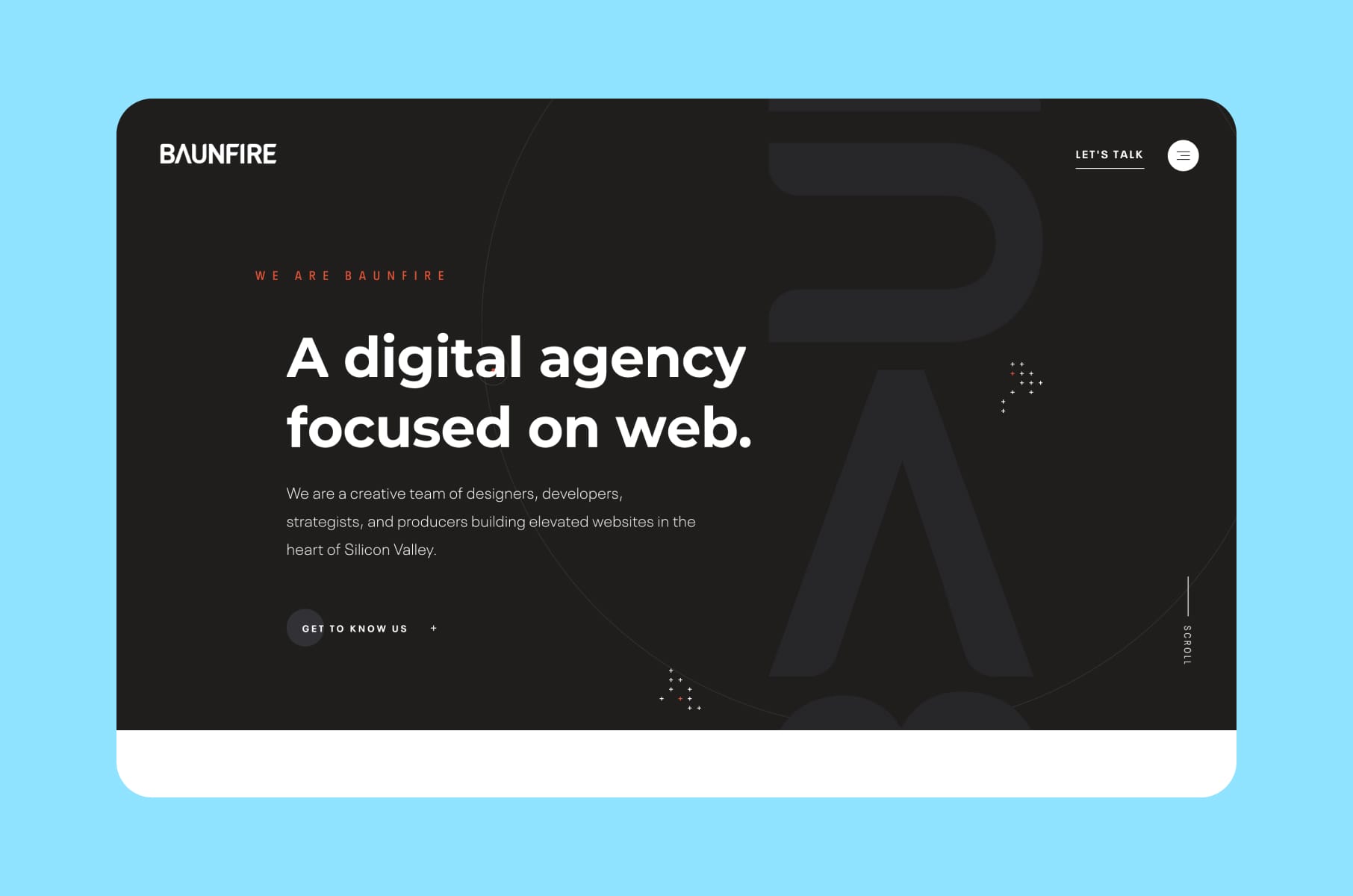
Baunfire describes itself as a Silicon Valley digital agency and a web design and development company. Its public site lists a San Jose address.
Look closer if your brief calls for a web-specific design and development engagement and you can verify a public case that resembles it. Use the location and positioning as context, then verify the relevant project evidence, team, and scope for yourself.
Ask: Which case matches our project type, and what did Baunfire own across discovery, content, design, CMS, technical delivery, and launch? Then identify the team that would do the work, the client inputs they depend on, the terms and timeline, and the support available once the site is live.
8. Eleken
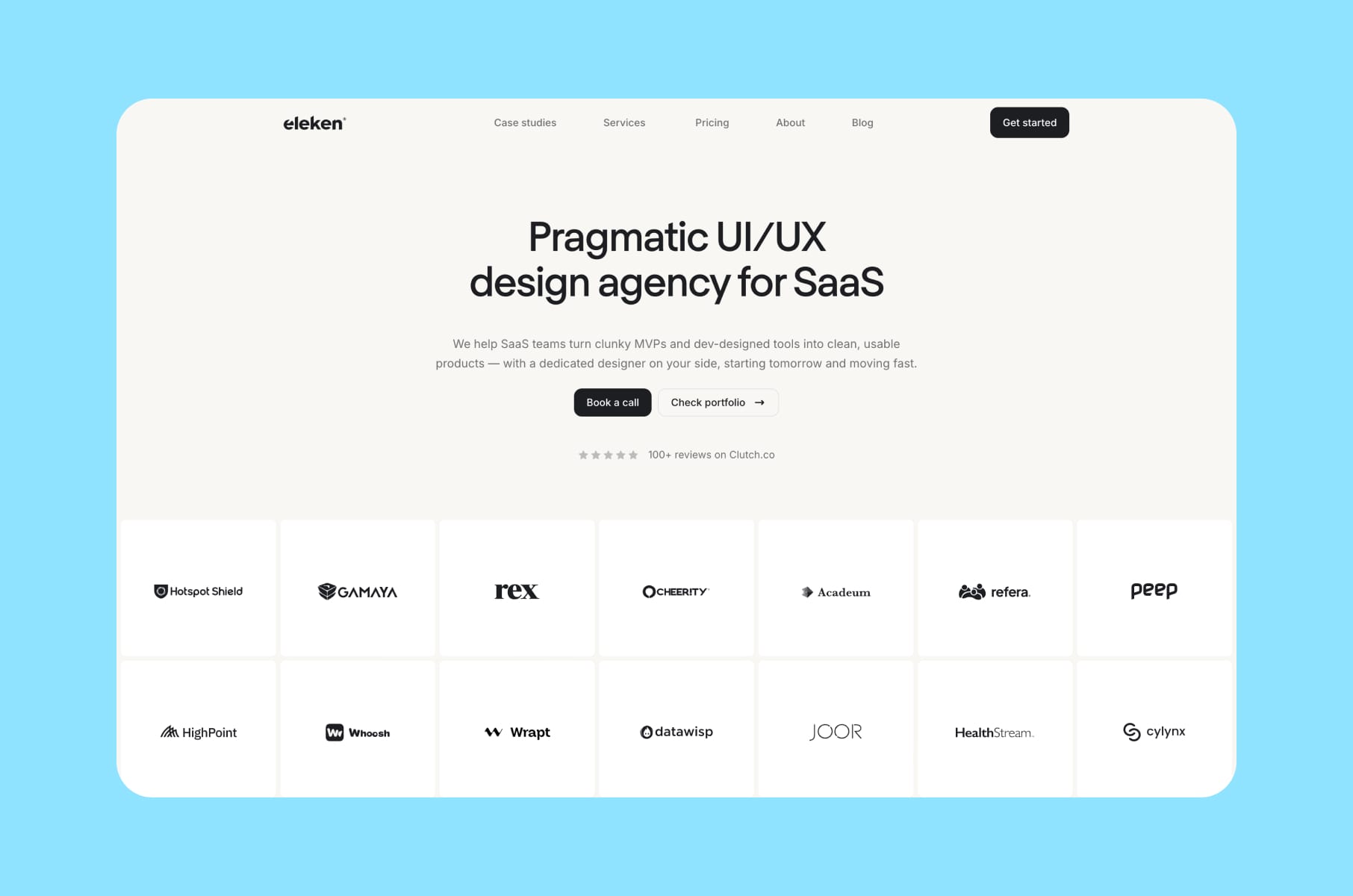
Eleken says it specializes in SaaS product design and assigns a dedicated designer who works directly with the client team. Its page lists a monthly retainer, full- and part-time options, Kyiv, and a US entity.
Look closer if your real need is SaaS product or web-app interface work. Be precise about whether you need a logged-in product, a marketing site, or both, because each creates different content, development, and handoff work.
Ask: Is our brief a fit for your product-design model, and which parts of the marketing site—if any—would your team own? Confirm designer availability, full- or part-time capacity, content and development scope, retainer terms, files and handoff, and how continuity is handled if the assigned designer changes.
9. Lounge Lizard
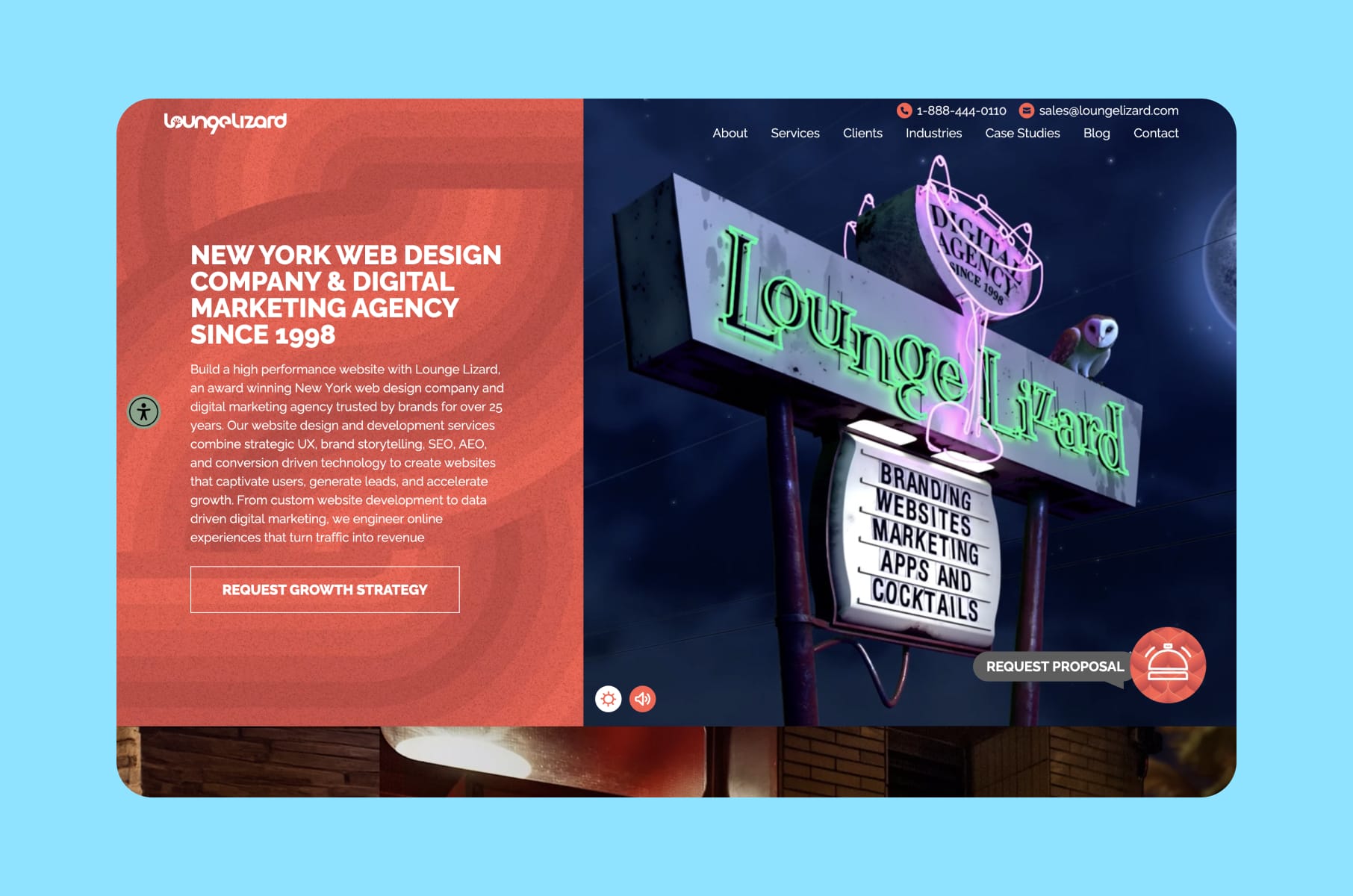
Lounge Lizard describes web design and development services and says it has been part of New York’s digital scene since 1998.
Look closer if you have found a current case that resembles your website challenge and want to examine the service team behind it. Treat longevity as company context and base the project decision on current work, the proposed people, and a scope that covers your requirements.
Ask: Which recent project is the closest match, and which location and team would be accountable for ours? Ask what the agency owned in that case, how the scope would cover strategy, content, design, development, and QA, and what the timing, fees, change process, handoff, and post-launch support would look like.
10. Instrument
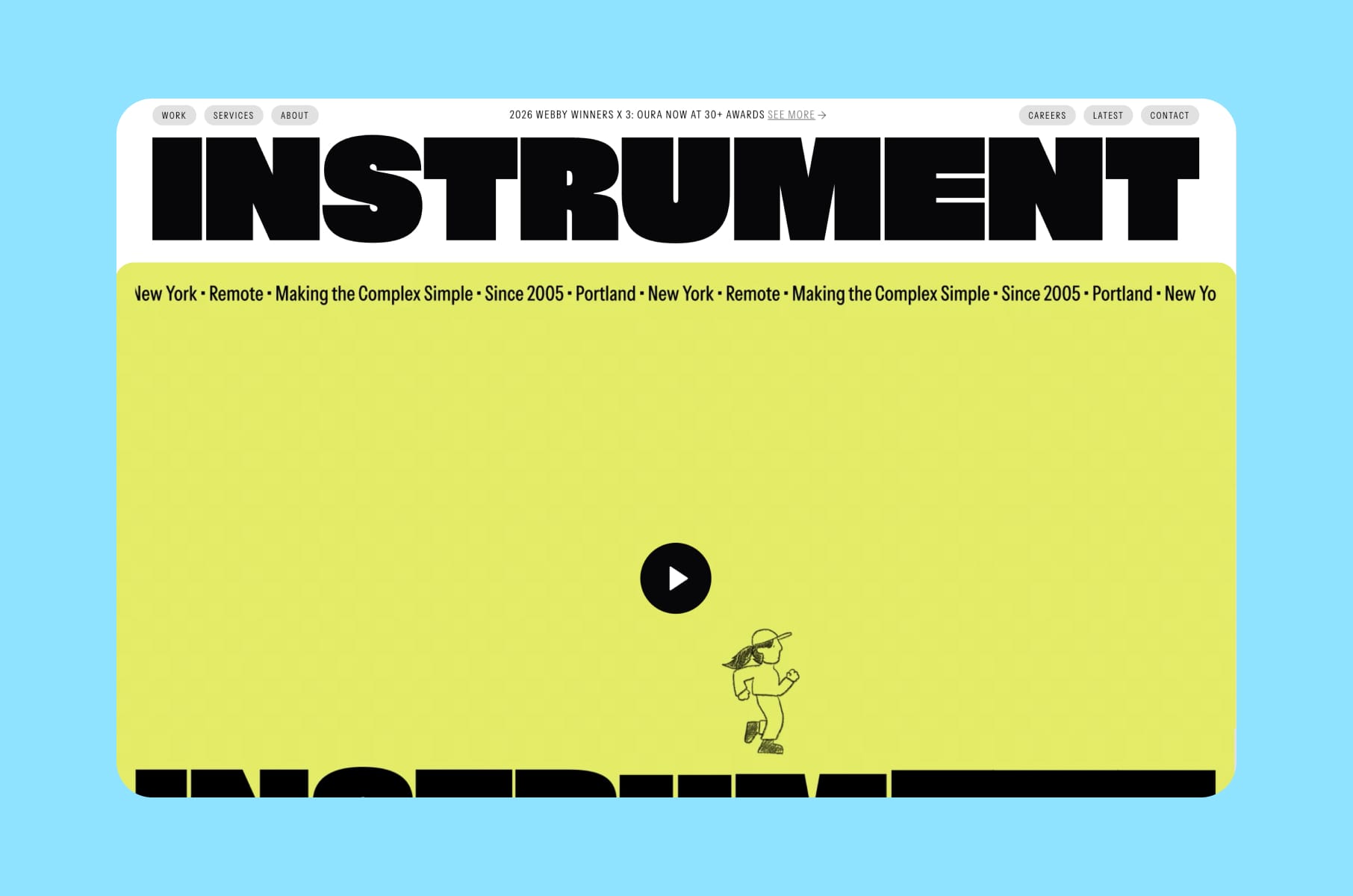
Instrument says it builds brands, products, and experiences. Its work catalog includes brand, product, and marketing categories, and its About page says the company has more than 350 employees and offices in Portland and New York.
Look closer if your website sits inside a broader brand, product, or marketing engagement and you are prepared to confirm that the required web scope is available. Use the company’s scale and work categories to prepare questions for the first agency call, then verify the team, delivery model, and commercial terms for this site.
Ask: Which website-specific services and current case apply to our brief? Ask who would lead and execute the work, who owns development, how deliverables and approvals are organized, what the commercial model includes, and how the project would move from concept to a supported live experience.
From 10 names to 3 calls
To narrow ten names to three calls, ask every company the same evidence questions and compare the answers without a numerical score. Keep the record beside the brief so every answer stays tied to a project requirement. Include the proposal version and date.
- Request two comparable projects. For each one, ask about the starting problem, actual scope, agency responsibility, delivery date, and who owned outcome measurement. If a reference conversation is available, ask what went off-plan and how the team handled it. Record whether the issue changed scope, timing, or staffing, and who approved the response.
- Confirm the scope boundaries. Put research, information architecture, content, copy, design system, interface design, CMS or development, integrations, accessibility, performance, analytics, and QA on one list. Mark who owns each item and which deliverables are excluded. For any excluded deliverable, note the internal owner and the dependency it creates.
- Identify the accountable team. Find out who leads, who does the day-to-day work, which roles are subcontracted, what your team must supply, and who approves changes. If the senior people from the pitch will have a smaller delivery role, the proposal should make that clear. Ask who remains available between milestones and who steps in when the lead is unavailable.
- Compare terms and dependencies. Review included rounds, change control, content readiness, access requirements, third-party costs, acceptance criteria, file ownership, handoff, and post-launch support. Compare headline prices only after the underlying scope is genuinely comparable. List any item whose price or timing still depends on an unresolved client decision.
- Keep one shared list of unknowns. Ask the same core questions on all three calls and record the answers in the same format, including owners and assumptions. For each unknown, add its source, owner, follow-up date, and the decision it could affect.
An early price remains an estimate until the scope and dependencies are known. A fast schedule needs explicit assumptions about content, access, integrations, feedback, and approvals. A portfolio full of similar layouts may reflect specialization, a reusable production system, or heavy template reuse; ask the team to explain what changes from one client to the next. If handoff is missing from the proposal, add files, component documentation, CMS training, ownership, and post-launch fixes to the written scope. Put those items in writing before comparing the final terms.
For a deeper preparation guide, use these questions for comparing web design proposals. They will help you pressure-test the proposal without turning this shortlist into a second hiring manual.
Quick answers before you choose
Sometimes a few questions are left even after all the research. Fair enough.
Is there one best web design company?
No single company is best for every website project. A useful shortlist matches your starting problem, required scope, accountable team, comparable evidence, working style, and commercial terms. This list stays non-ranked because we did not run a cross-company test or apply a reproducible scoring model. Treat each name as a lead to investigate, then choose from the evidence attached to your own brief.
Should industry experience decide the shortlist?
Industry experience is a useful signal when the case involves a similar audience, problem, scope, and delivery responsibility. A familiar client logo alone says very little about what the agency did. Ask the team to unpack one comparable project: what the client needed, which parts the agency owned, what constraints shaped the work, and who measured the outcome. Adjacent experience can still be relevant when the problem and responsibilities line up.
What should you compare besides the proposal price?
Compare scope boundaries, the people assigned to the work, client dependencies, exclusions, comparable evidence, change control, file ownership, handoff, and post-launch support. Then compare price against that shared picture. One proposal may include content, development, analytics, and QA while another assumes your team will provide them, so the totals alone can mislead. For wider budget context, read our website design pricing guide.
Reduce the list to three companies whose evidence resembles your brief. Before signing, record why the chosen team fits the problem, which assumptions remain, and who owns them.
If your brief covers website structure, design, content, and agreed implementation, you can also explore Website Design with Merge. Use the same questions when you evaluate us.