Web design for startups that treats the website as a whole

Give every page the same attention as the homepage

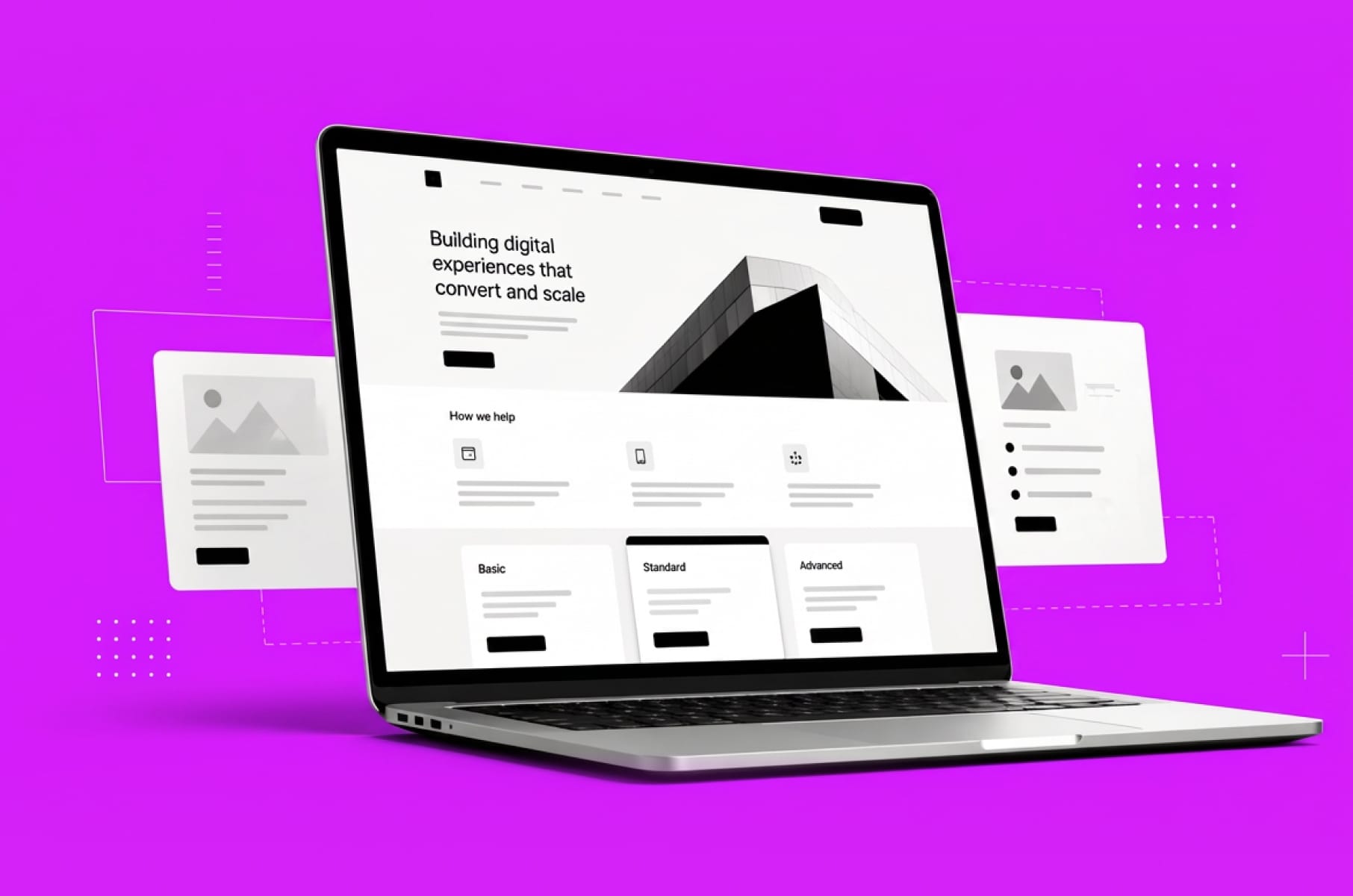
Merge carries the look you choose through every page in scope, designing each one for desktop and adapting it for mobile. Your developers can implement the designs, or Merge can continue when development is included in scope.

Book a call

lighting

Your website project can start before the brief is complete

You might have only a business goal and audience, a partial brief, or finished website designs that need implementation. Existing brand or product material can add useful context. We start with what you already have, clarify what has been decided and what remains open, then agree on what the website scope needs to cover.Website Redesign is the better fit when an established site needs a broader rethink or replacement. If the job is one focused campaign or product-launch page, use Product Landing Page.

lighting

What your startup web design project can include

Your project may include a moodboard with three concepts, desktop designs and mobile adaptations for each page in scope, a UI kit, and interaction notes. Together, we decide which of the eight areas below your website actually needs.

    item 0 image
    Bespoke UI
    item 1 image
    Animations
    item 2 image
    UX copy
    item 3 image
    Logotype
    item 4 image
    SEO
    item 5 image
    Marketing
    item 6 image
    Graphics
    item 7 image
    Branding

1

Choose the visual direction

We review your goals, audience, and available materials, then present a moodboard with three concepts. You choose which direction we develop across the agreed pages.

2

Define structure when needed

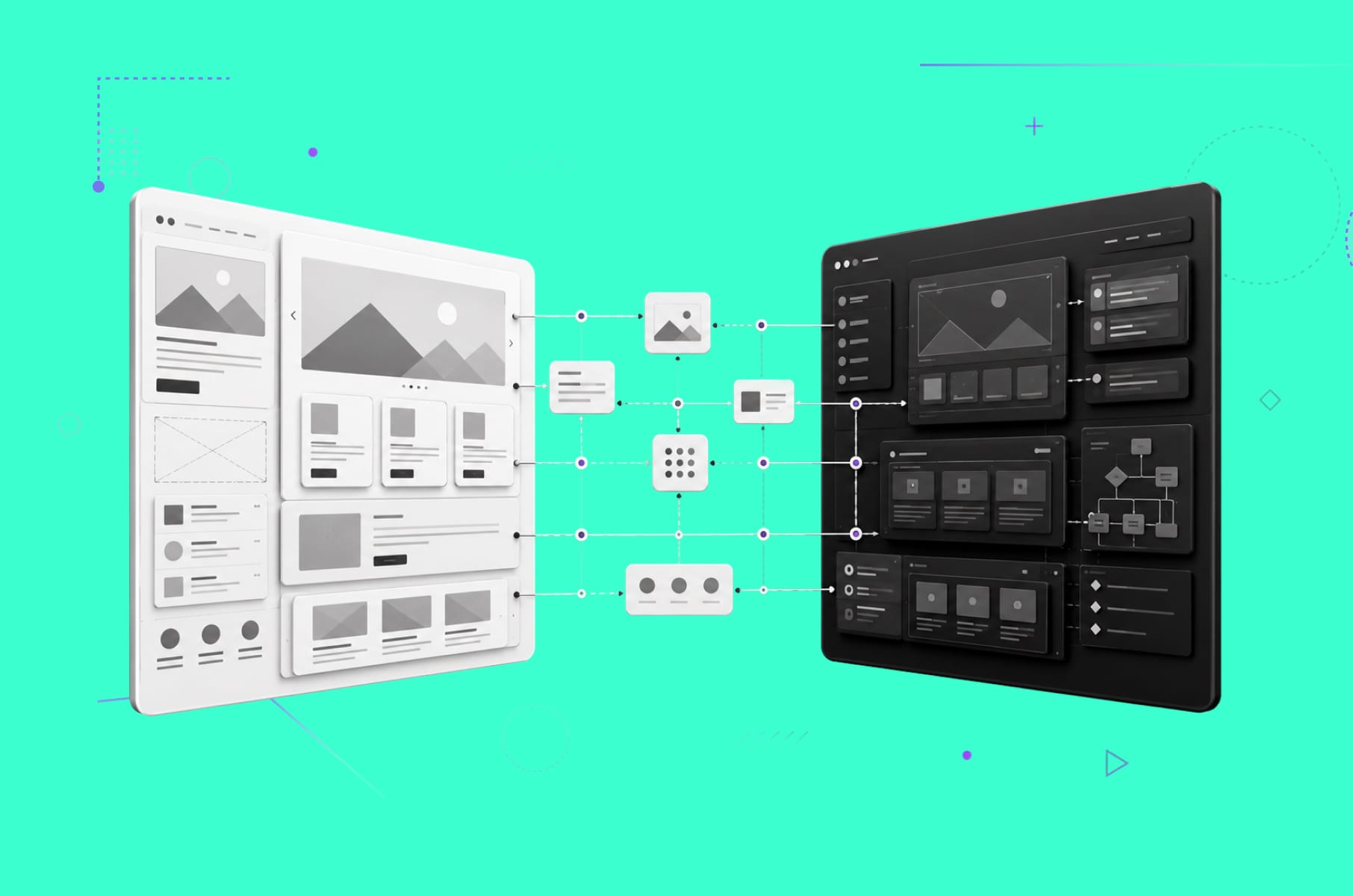
If the project calls for a sitemap or low-fidelity wireframes, we use them to review navigation and content order before detailed page design.

3

Design the pages in scope

We design the desktop pages and create a UI kit for colors, typography, and reusable interface elements. Your team reviews them against the visual direction it selected.

4

Prepare mobile designs and handoff

We adapt each page in scope for mobile and document interactions or animations that a static design cannot show. The final Figma file then goes to the team building the website.

What your developers receive

We hand over the final Figma file, desktop and mobile designs for every page in scope, a UI kit, and notes for interactions or animations that static screens cannot show. Your developers can see the approved layouts, reusable elements, and behavior in one place.Your developers can build from these materials. If development is in our scope, we continue from the approved designs. If another team is building the site, our guide to coordinating website design and development covers the decisions to agree before implementation.

lighting

Why teams choose Merge for website design

Choose the direction early

Choose the direction early

We present a moodboard with three concepts first. Your team chooses the direction we apply to every page in scope.

Design beyond the homepage

Design beyond the homepage

We design every desktop page in scope and adapt each one for mobile. Your developers receive the approved layouts for the full page set.

Add only what you need

Add only what you need

Your project can include structure, wireframes, UX copy, motion, or brand work. We agree with you which of these services belong in the scope.

Choose who builds

Choose who builds

Your developers can build the approved designs. If your project includes development, we continue from the same final Figma file.

See each role clearly

See each role clearly

For Agentless and Mural, we explain which website work we handled and separate it from the wider platform and XR work.

Compare website briefs

Compare website briefs

We designed a one-page studio site for DGC, product-demo pages for Bytek, and separate client and partner websites for Versus.

See how we approached different website briefs

Each example covers the client's starting point, the work we handled, and what the client received.

Did Global Cinema

Did Global Cinema is a new film studio creating original films, series, and commercials. Its one-page website is the studio’s main digital platform, presenting its story, current work, and services while giving the new company a distinct public presence. Problem The founders wanted a recognisable studio signature that could open each release while remaining personal and adaptable across the website, social channels, and on-set materials. Solution We designed and built the responsive one-page Webflow website around a twin-lens logo and red recording dot. For the studio intro, we animated a boy’s journey to becoming a director.

View case

Versus Trade

Versus Trade introduced a CFD model built around trading one asset against another. Retail traders and prospective partners needed different information, and the brief called for a separate public site for each audience. We structured and designed the client and partner websites with responsive layouts, audience-specific messaging, and visual guidelines tied to the same brand.

View case

Bytek

Bytek had moved from agency services to data and AI products, but its website still reflected the old business. We redesigned the lead-generation and product-demo pages to explain those tools to a younger, global audience. The responsive Webflow build added interactive product demos and animated illustrations, with matching English and Italian versions across the site.

View case

Agentless

Agentless helps U.S. homebuyers complete a property purchase without a traditional buyer's agent. Its public website had to explain how the service works and make the potential savings tangible. We designed and built the Webflow marketing site, including a simple calculator that lets buyers estimate what they could save by completing the purchase without an agent.

View case

Mural

Mural was exploring an XR initiative alongside its main visual-collaboration platform. It needed a public website that could explain the new work, showcase the XR projects, and give interested users a way to register for beta access. We defined the page hierarchy and interface copy, then designed and developed the responsive Webflow site from scratch as the initiative's public-facing home.

View case

LiveSchool

LiveSchool helps schools manage culture and student behavior, but its website needed to make that value clear to educators and distinguish the product from competing EdTech tools. We began with audience and competitor research, then developed visual concepts and high-fidelity page designs. We applied the approved direction across responsive layouts, motion, and the final Webflow build.

View case

Siren

Siren's website needed to make data security feel approachable without the cold, technical visual language common to the category. We created a visual identity around a friendly robot mascot, custom illustrations, and animation, then carried that system through the responsive page designs. We built the finished website in Webflow, giving the security product a warmer and more recognisable public face.

View case

1/7

What our clients say

image
Read Clutch review

“You as a company are now supporting us not only for the website, but also for other things. The quality of the feedback has been excellent both for our customers and our internal team. Now, the website is the pillar for every single presentation.”

Paolo Dello Vicario, CEO & Co-Founder at Bytek

project image

1/3

image
Read Clutch review

“Overall, it’s been a great experience. The team’s been super responsive. The speed of implementing the designs in Figma and the speed of responding to our feedback and implementing changes were really good. Pleased with the amount that we got done.

Winston Chenery, Senior Director of Marketing at Everyday Speech

project image

1/3

image
Read Clutch review

I went through two years of trying to find somebody to make our website beautiful. And then finally I found Merge. Their team is very, very skilled at what they’re doing. Great collaboration, great process, they crushed it.”

Matthew Graham, CEO at RapidDev

project image

1/3

lighting
;

How to Do a Website UX Audit Guide

Evaluate the quality and usability of your website’s UX and UI design by performing a comprehensive UX audit. Our complete, up-to-date guide and checklist will show you how.

In-depth UX audit manual

Your website's assessment

UX audit checklist

Step-by-step instructions

How to Do a Website UX Audit Guide

Questions to answer before your website project starts

Yes. We can design the website for your developers, take the approved designs into development, or build from finished designs your team supplies. At the start, we confirm what you already have, who will build the site, how your team will review the work, and what the final handoff needs to include.

For design-only projects, you receive a moodboard with three concepts, desktop and mobile designs for every page in scope, a UI kit, interaction notes, and the final Figma file. We can also include structure or wireframes, UX copy, motion and illustration, or logo and brand work when those services are part of the scope.

Share the website goal, audience, expected pages, features, timing, and known technical requirements, along with any brand assets or content you already have. If we are building from finished designs, include the breakpoints, component states, behavior notes, and near-final content. We can estimate with gaps, but the figure stays approximate until the main decisions are clear. Our questions to answer before hiring a web design agency can help you prepare.

Two review rounds are standard. If you need more, we agree the number before work begins and price the extra rounds separately. We also confirm which pages and deliverables your team will review. New pages or changes requested after approval receive a separate estimate.

The schedule depends on the number of pages, whether development is included, and when content or input from other teams will be ready. Integrations, review rounds, and approval time can also affect the timeline. Once we confirm those factors, we can give you a project-specific schedule.

The estimate depends on whether you need design, development, or both, the number of pages, and any optional services. Content readiness, interactions, integrations, and the screen sizes that need dedicated layouts also affect the scope. Our pricing calculator gives a preliminary figure, while our website design cost guide explains the main cost drivers.

Yes, when development is included. We can build in Webflow or WordPress, or use custom front-end code. The choice depends on the website and any existing technical constraints. The build can also include forms, agreed integrations, basic metadata, and semantic markup. We can add basic analytics when requested. If Webflow is already the right fit, see our Webflow Development service.

We agree who will launch the website before work begins. For websites we build, we fix implementation bugs tied to the agreed work after launch. New pages and later changes receive a separate estimate. CMS training is available on request and can include a recorded walkthrough of project-specific functionality. We also have a basic Webflow CMS guide. We discuss hosting, maintenance, and ongoing support separately.

Let's begin

Fill out the form — we’ll get back to you within 24 hours
Get a tailored proposal specifically for your project
Kick-start your project with our expert team